An air conditioner doesn’t send invoices, so its costs hide in three other places: the power bill, the repair history, and the probability of dying on the exact weekend you can least afford it. Pull all three into one view and the “it still works” argument gets thin fast — especially in a valley that runs a system six months a year.
Cost one: the efficiency tax
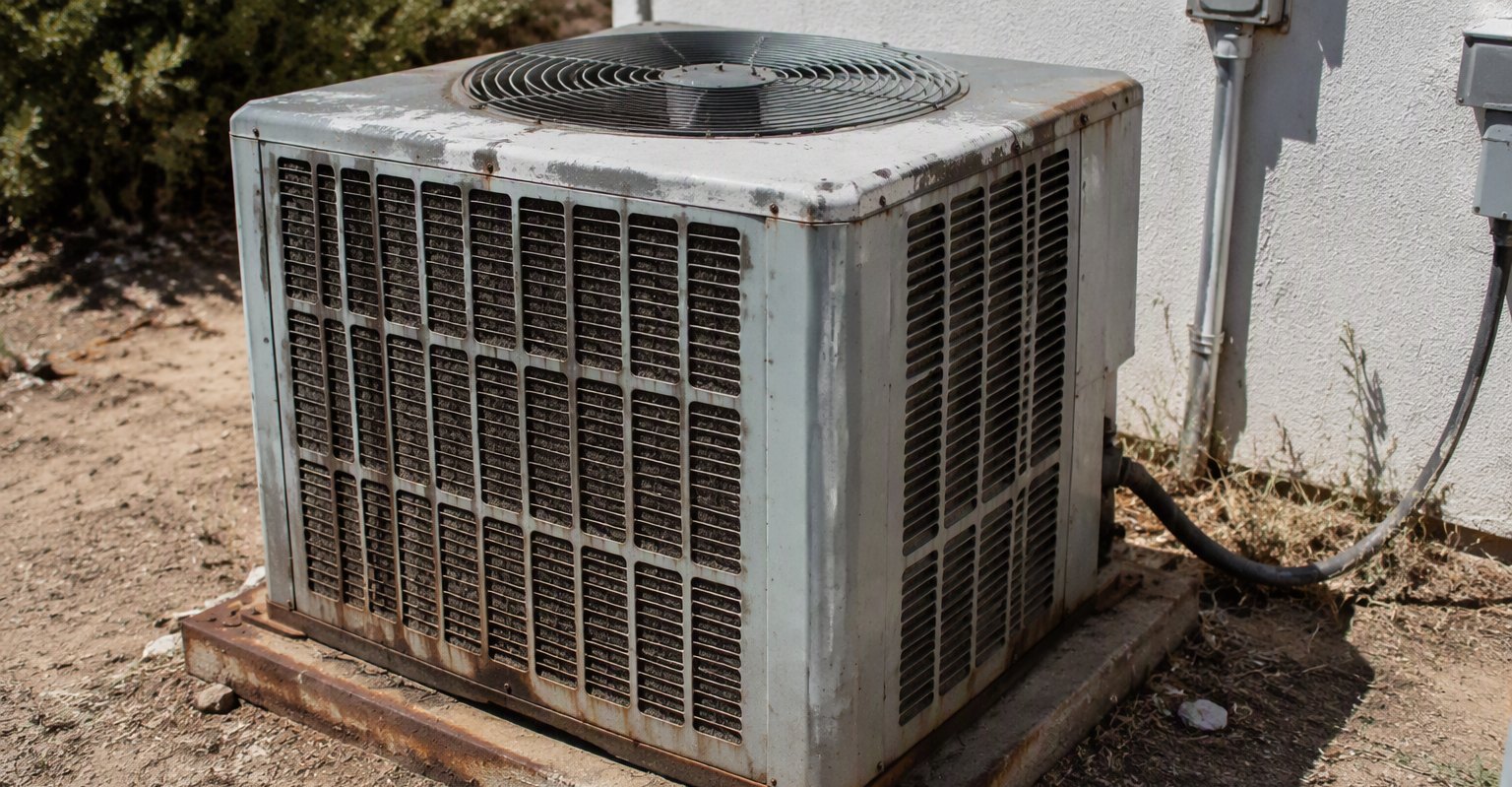
A mid-2000s condenser was likely rated 10 to 13 SEER under the old scale — and age, wear, and coil fouling shave that further. Current code-minimum equipment starts dramatically higher on the SEER2 scale, and premium tiers go further. In practical terms: an old system can spend 30 to 40 percent more electricity for the same cooling. With Riverside’s run hours, that gap can mean hundreds of dollars every summer — quietly, every single month from May to October. The new system’s efficiency advantage pays a dividend here roughly double what it pays in a mild climate.
Cost two: the repair drumbeat
One capacitor is a footnote. But look at the pattern past year twelve: a capacitor this summer, a contactor the next, a fan motor after that, then the conversation about refrigerant. Each visit is modest; the three-year total is not. And the drumbeat accelerates — heat-aged systems fail progressively, because every part is the same age and the weak ones go in sequence. Track the invoices across three summers; that total is real money aimed at a system that will still be old when it’s spent.
Cost three: the July lottery
Old systems don’t fail on mild April Tuesdays; they fail under peak load — the first 105-degree stretch, a Saturday, the same week everyone else’s old system failed. That’s when schedules are tightest and options are narrowest. The replacement done on your timeline in spring, with full equipment choices and calm scheduling, is a different transaction than the emergency changeout in a heat wave. The system that’s “still going” is also still buying lottery tickets.
The honest math, on one page
- Age: past 12 years in this valley, the actuarial table turns. Past 15, it’s shouting.
- The repair in front of you: a major component bill on a system past 12 rarely survives the math; a minor part on a sound system does.
- Refrigerant type: older refrigerant gets scarcer and pricier every season — a recharge-dependent system inherits that curve.
- The power bill: compare your summer kWh against a neighbor with a newer system, or run the efficiency gap on your own bills. The monthly tax is the number nobody adds up.
Add the four lines. When the efficiency tax plus the repair drumbeat plus the failure risk exceeds the payment on a new system — and in this valley it often does by year thirteen — the ledger has spoken.
Want the math run on your actual system? Call (888) 217-1674 — you’ll get both numbers and the reasoning, then the decision is yours.