Every July, the same story repeats across the Inland Empire: systems that seemed fine in May fail in the first triple-digit week, and the calls stack up by the hundreds. The failures feel sudden. They aren’t — the parts that die in July announce themselves in April, quietly, to anyone who looks. This is the looking.
1. Change the filter — and mark the calendar
Summer is filter season: the system will run daily for six months, pulling every cubic foot of house air through that pleat. Start the marathon with a fresh one, then check monthly through October. The light test settles every argument — hold it up, and if light barely passes, it’s done.
2. Wash the condenser coil
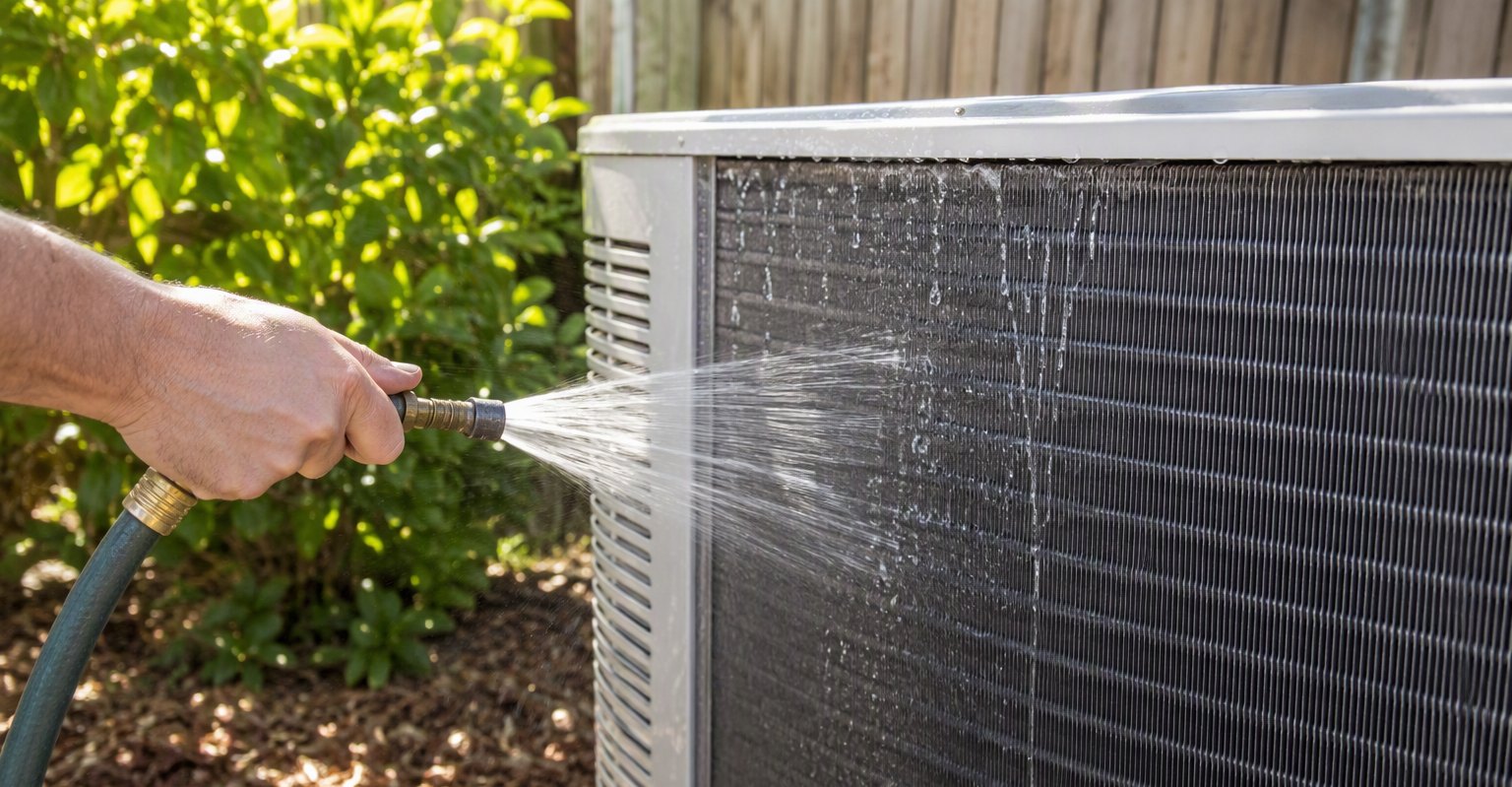
The outdoor unit spent fall and winter collecting Santa Ana dust and spring pollen in its fins, and that mat acts like a sweater on a runner. Kill power at the disconnect, then rinse the coil gently from the inside out with a garden hose — gentle stream, no pressure washer, which folds fins flat. Ten minutes here is real capacity restored for the whole summer.
3. Clear two feet around the condenser
The unit breathes through its sides. Winter’s weeds, the relocated trash cans, the stacked pavers — anything inside about two feet chokes it. Trim it all back, and while you’re there, look up: anything dripping or shading oddly is worth a note for the tech.
4. Flush the condensate drain
The indoor coil wrings gallons of water from summer air, and it all leaves through one small drain line. A cup of distilled vinegar down the access tee now, or a wet-vac on the outside termination, prevents the August ceiling-stain story. Attic air handlers make this one non-negotiable.
5. Run the test cycle on a mild day
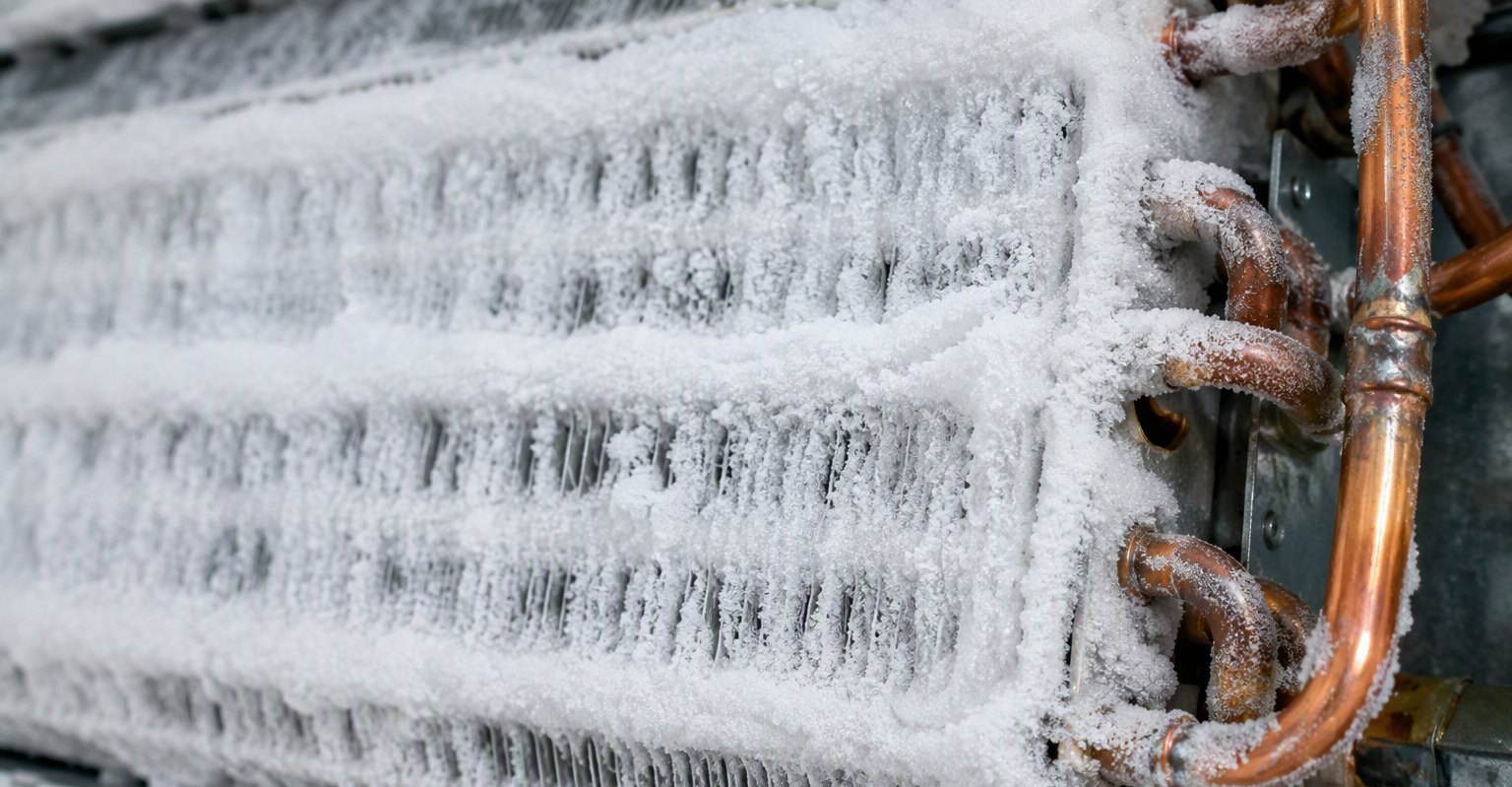
Pick an 80-degree afternoon, set the thermostat to cool and five degrees under room temperature, and let it run twenty minutes. Air from the vents should feel genuinely cold, the outdoor fan should spin, and the system should cycle off normally. Weak airflow, warm air, ice on the lineset, short cycling, or new noises — each is a small April repair instead of a July emergency.
6. Book the professional pass while the calendar is yours
The homeowner checklist covers the surfaces; the tune-up covers what you can’t measure — capacitor drift, refrigerant charge against spec, contactor wear, electrical torque, temperature split. April slots are open, the visit is unhurried, and anything drifting gets swapped for pocket change instead of failing on a Saturday in July. The first heat wave is the worst week of the year to discover a weak capacitor.
Want the professional pass on the calendar? Call (888) 217-1674 — April books in order, and the readings come with the visit.