Repair-or-replace isn’t a sales question; it’s an arithmetic question with one safety override. Run the override first, then the math, and the decision makes itself. The order matters.
Step one: the heat exchanger override
The heat exchanger is the metal wall between the fire and your air. A crack in it can leak combustion gases — including carbon monoxide — into the house. A confirmed crack isn’t a repair item; it’s the end of the conversation, full stop. This is why the exchanger inspection comes first on any older furnace, and why you should ask to see the finding — photos or a mirror camera — rather than take it on faith. Sound exchanger: proceed to the math. Cracked exchanger: replace, and any tech showing you a real crack is doing you a service.
Step two: the age anchor
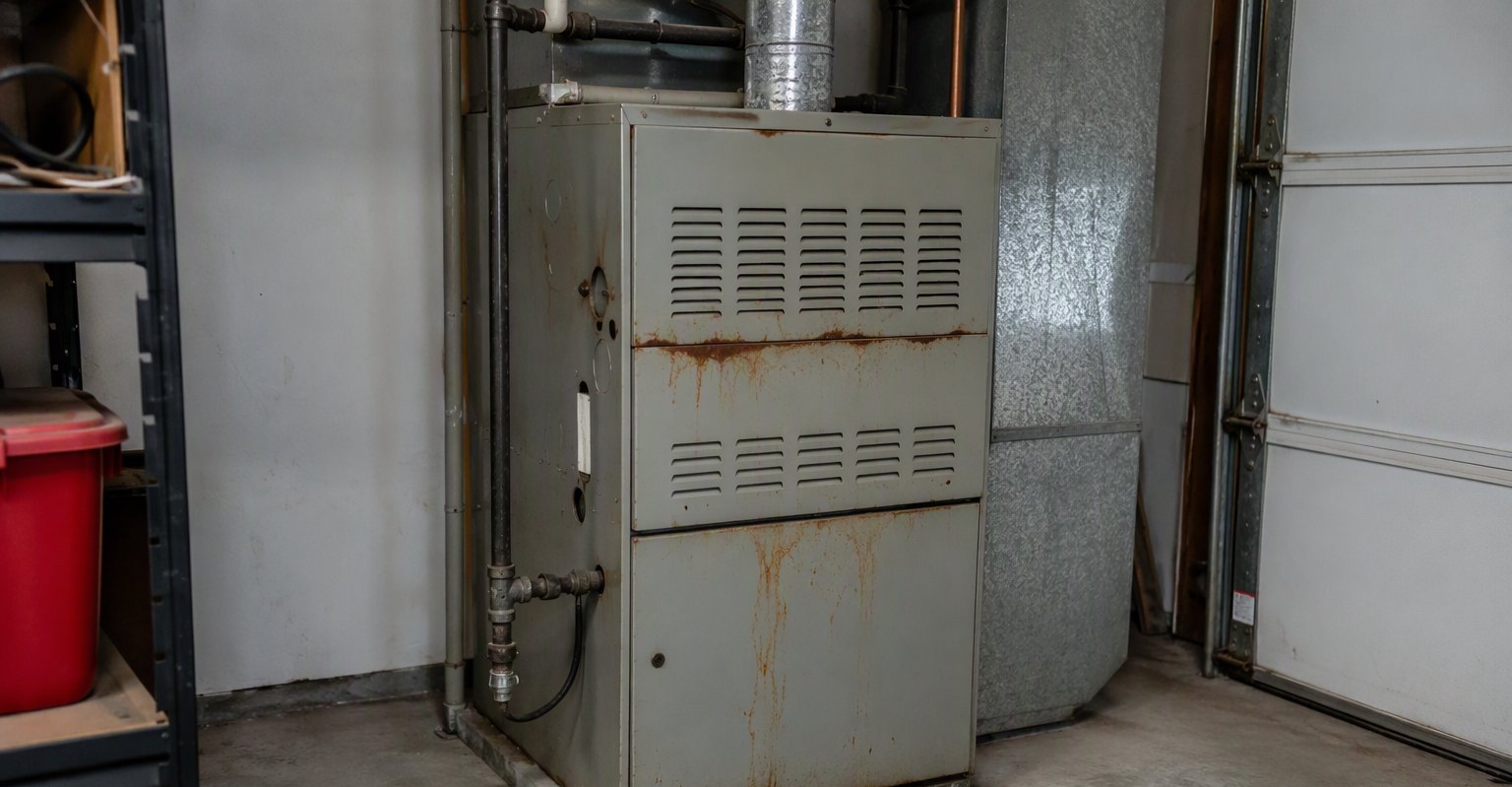
Furnaces commonly run 15 to 20 years — and mild-climate units can exceed that, because a Riverside furnace works three months a year instead of six. Age alone doesn’t condemn a furnace here the way it condemns an AC. But past year fifteen, every repair decision borrows against a shrinking runway, and the parts pipeline for very old models thins out. Anchor the decision: under 12 years, repairs are usually the answer. Over 15, they need to earn it.
Step three: the repair math
Weigh the repair in front of you against three things. The system’s age — a $200 flame sensor at year 8 is obvious; the same sensor at year 18 is a bet on borrowed time. The part’s significance — igniters, sensors, and pressure switches are the normal wear items and stay modest; boards, inducer motors, and blowers climb the ladder; anything involving the exchanger ends it. And the pattern — one repair in five years is maintenance; three repairs in three winters is a system sending a message. Add the recent invoices to the current quote and compare that total against a replacement payment. The drumbeat math usually settles it.
Step four: the efficiency side note
Older furnaces convert noticeably less of their gas into heat than current equipment — but the valley’s short heating season shrinks the savings gap. Efficiency is a legitimate tiebreaker between two close options; it’s rarely the deciding factor the way it is for air conditioning in this climate. Comfort upgrades — quieter operation, steadier two-stage heat — count as much as the utility math here.
The questions that protect you
What exactly failed, and can I see it? What’s the heat exchanger’s condition, and can I see that? What’s the total of my last three years of repairs? What’s the replacement quote, complete, next to this repair? A contractor who answers all four with numbers is advising. One who skips to the replacement monthly payment is selling.
Staring at a furnace quote right now? Call (888) 217-1674 — you’ll get the readings, both prices, and the reasoning. The decision stays yours.