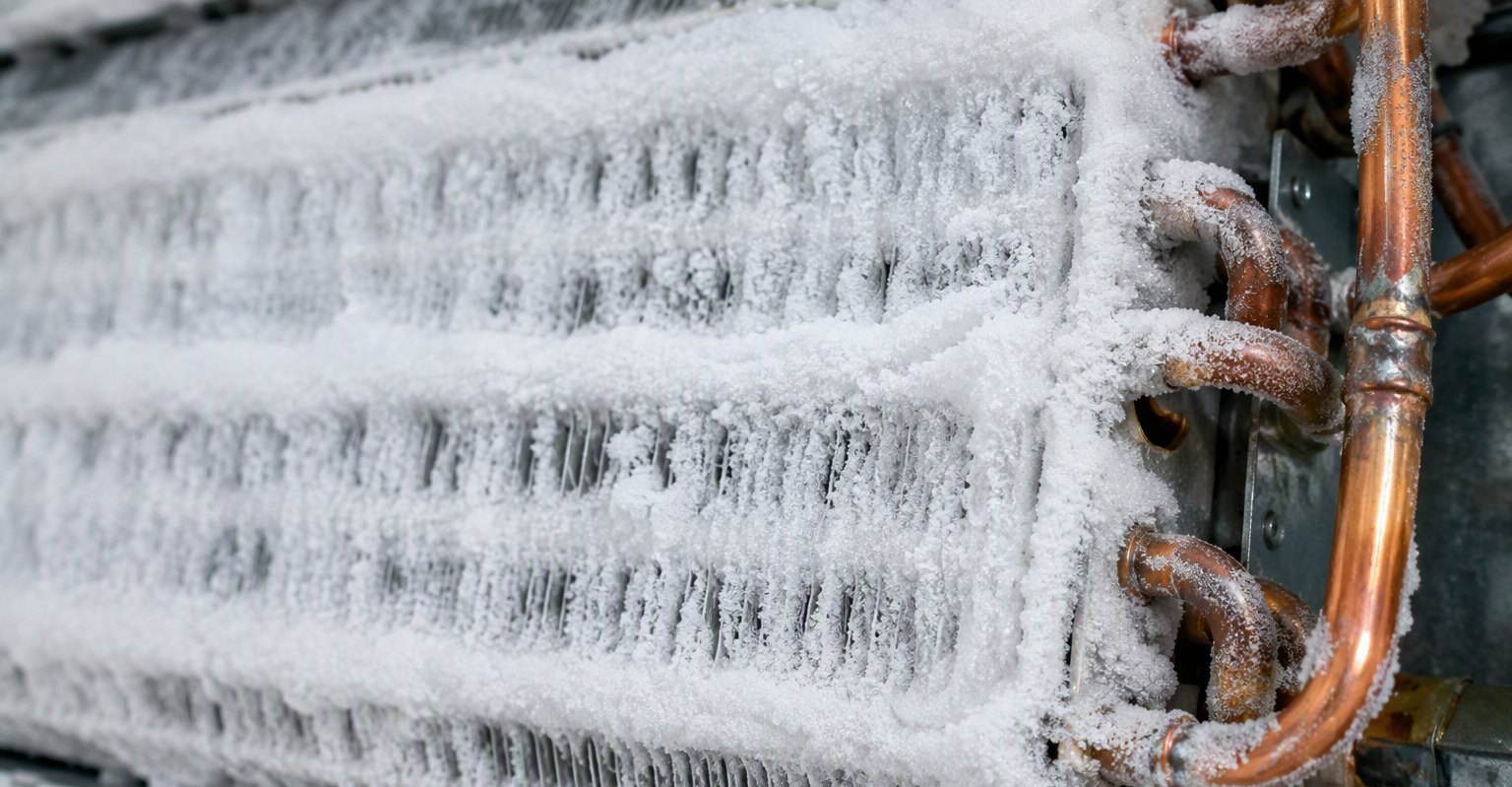
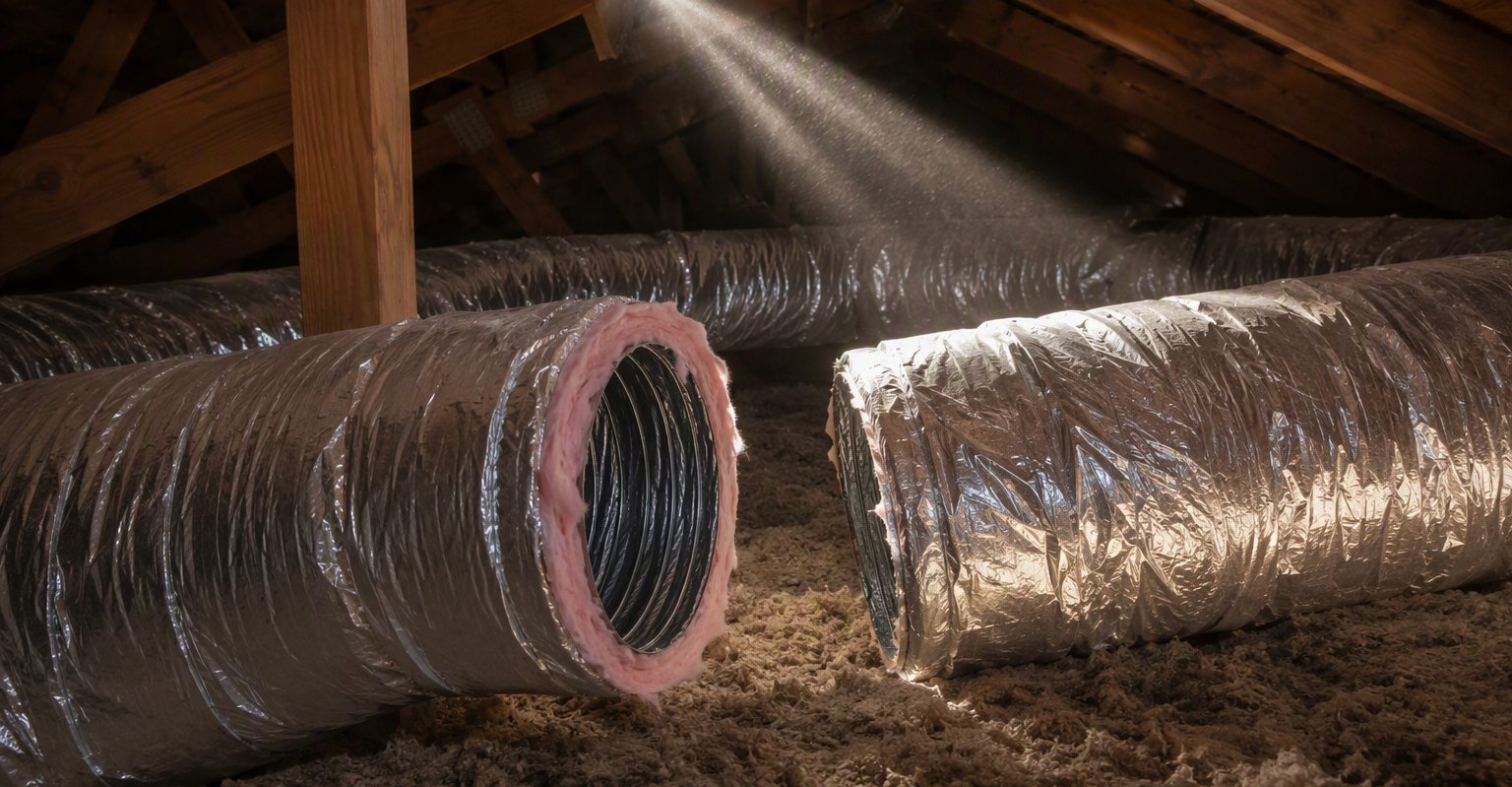
Ducts live where nobody looks: the attic, where a Riverside August pushes 140 degrees and up. Everything about that environment is hostile — heat cooking the flex line jackets, tape drying and letting go, insulation slumping off joints, and decades of other trades stepping on runs. The equipment downstairs gets the attention; the delivery system upstairs quietly fails. The result is a house paying full price for cooling it never receives.
The four failures hiding up there
- Disconnected joints: a flex run pops off a collar and the attic gets air-conditioned instead of the bedroom. It happens silently, and it can dump a shocking share of a system’s output.
- Crushed and kinked flex: one run flattened by storage, a cable installer, or its own sag — and the room at the end of it never cools again.
- Leaking connections: dozens of small gaps at boots, plenums, and splices, each leaking a little, totaling a lot. The industry’s own research has long found typical duct systems losing a fifth or more of their air.
- Undersized returns: the system can’t push out what it can’t pull in. An undersized return starves the whole machine — and no condenser upgrade fixes it.
The symptoms that point at ducts, not equipment
One room stubbornly hot while others cool. Vents with weak, lazy airflow. Dust puffing from registers at startup. A system that runs forever and never satisfies. Cooling that got worse after someone worked in the attic. And the classic: a brand-new system whose comfort problems are identical to the old system’s — because the ducts didn’t change.
Why new equipment doesn’t cure old ducts
Put a bigger, more efficient condenser on a leaking duct system and you get more expensive air delivered to the attic — the losses scale with the equipment. This is the replacement-job trap: the equipment quote looks complete, but the delivery system was never measured. The honest install includes a duct read — static pressure, visual inspection, leakage assessment — because a matched system means the whole system, not just the boxes with model numbers.
What fixing it actually looks like
Sealing joints and connections with mastic (not the cloth stuff called duct tape, which fails in attics), re-strapping sagging runs to proper pitch, replacing crushed sections, adding or enlarging returns where the math says so, and insulating what’s bare. None of it is glamorous; all of it is measurable. The before-and-after numbers — airflow at the problem vents, temperature split, static pressure — are the proof it worked.
Weak vents or a room that never cools? Call (888) 217-1674 — the diagnostic reads the ducts along with the machine.